This guide explains how to evaluate Lifetime Benefits Solutions services with a practical, objective lens. It outlines what the keywords typically refer to in benefits planning, why customers compare providers and pricing structures, and how to approach decisions responsibly. You’ll also find a conditions checklist, a comparison table framework, and a set of FAQs to support informed next steps.

If you’re exploring services associated with Www.lifetimebenefitsolutions.com, the very important step is to assess fit—how the offering aligns with your household needs, eligibility rules, and reasonable expectations—rather than focusing only on marketing language or assumed outcomes. In benefits planning, the details in contracts, underwriting requirements (if applicable), service timelines, and administrative processes often matter more than broad claims. A “lifetime” promise can feel reassuring, but the true value typically lives in the operational and contractual mechanics: what is covered, what is excluded, when benefits begin, what evidence is required, and how decisions are communicated.
From an industry perspective, the top decisions usually come from: (1) confirming product or service scope, (2) validating pricing components and total cost of ownership, (3) verifying supplier/provider credentials and operational capacity, and (4) ensuring customer support pathways are clear. This approach reduces ambiguity and helps you compare like-for-like. When these elements are unclear, you may end up paying for something that behaves differently from what you understood—especially when the benefit is needed most.
Another practical takeaway is to avoid letting urgency or optimism drive your choice. Lifetime-style programs frequently involve long time horizons, so small misunderstandings can compound. Treat the purchase and enrollment process like a due diligence exercise: gather documentation, compare terms, confirm who does what, and make sure your expectations are aligned with the actual legal and administrative reality.
Finally, keep in mind that a provider’s responsiveness during the sales process is not always the same as their performance during claims or service requests. A responsible evaluation therefore asks both “what do they say they will do?” and “how can you verify they consistently do it?” Documentation, service workflows, and escalation processes are your best indicators.
The keyword set you provided includes a website reference—Www.lifetimebenefitsolutions.com. In general, when consumers search for “lifetime benefits” concepts, they are often trying to understand arrangements that may involve long-duration coverage, good support services, or benefits administered over extended periods. In mature insurance and benefits markets, these topics commonly intersect with:
Because “lifetime benefits” can mean different things depending on the jurisdiction and the product category (e.g., insurance-related benefits, wellness support, or managed benefit programs), a responsible evaluation should focus on the precise documentation provided by the supplier. The same phrase can describe very different arrangements: some may mean truly lifelong coverage under specific conditions; others may mean extended support that can change, terminate, or be subject to ongoing eligibility.
It can also intersect with consumer expectations around “no surprises.” In regulated categories, providers generally must disclose key facts. However, disclosures can still be missed if they are buried in long documents or if the consumer does not know what to look for. For that reason, the evaluation should not stop at a summary page or introductory brochure; it should extend into terms, schedules, and procedural documents.
In addition, the legal classification of the program matters. Some offerings may be positioned as “benefits” but structured through service agreements, membership arrangements, or third-party networks. The evaluation therefore needs to answer: what exactly are you buying (insurance coverage, a service subscription, a managed program, or a hybrid), who is obligated to deliver it, and what events could change it over time?
Even when two providers sound similar, differences in pricing mechanics can significantly affect the final value you receive. Industry professionals typically analyze pricing in layers—what you pay now, what you pay later, and what triggers additional charges (or changes to coverage/support). A program can appear affordable upfront but become expensive if it includes increasing fees, renewal adjustments, or separate costs that only surface when services are used.
When reviewing any provider associated with Www.lifetimebenefitsolutions.com, pay close attention to:
In practice, pricing comparisons should include “total cost of ownership” across the time horizon you care about. If a program is truly “lifetime” in nature, you should consider long-term implications: Do fees rise with age? Do fees rise with claims activity? Are there periodic review mechanisms? Is the program dependent on external costs that could be passed through?
Also, understand what you might pay if you need to use the benefit. For example, some programs require co-pay-like contributions, deductibles, service visit charges, or documentation fees. If you don’t look for these details, you might interpret benefits as “included” when they are actually subject to cost-sharing or service caps.
Comparing providers also means comparing how they handle “exceptions.” Sometimes pricing differs because one provider includes more coverage breadth or better service capacity. Or it may differ because one provider has tighter eligibility criteria. A like-for-like comparison should therefore align not only price, but scope, limits, and administration rules.
Finally, ask whether the provider can provide an “illustrative cost scenario” that matches your household needs. Many providers can show examples of how the program would work under certain common events (for example, enrollment, a routine request, or a more complex claim). If they cannot explain their pricing mechanics in a straightforward way, that is a signal worth taking seriously.
From an industry expert’s standpoint, “supplier details” typically mean two things: who is responsible for delivering the benefit and who is responsible for paying or adjudicating claims. In a well-structured market, responsibilities are documented, and customers can trace obligations to named entities. This is critical because long-duration benefits often involve multiple hands—underwriting, administration, network providers, and dispute handling.
When evaluating any offering connected to Www.lifetimebenefitsolutions.com, validate the following:
Where possible, request formal documentation before committing to any plan. Ask for the exact contract or policy/terms and any required schedules (fee schedule, claims procedure, service provider list, eligibility requirements). If the supplier is unwilling to provide key documents, that reluctance is itself a risk signal. It may indicate that the program is hard to explain because the details are unfavorable or complex—or that the provider cannot support consistent administration.
Expert validation also includes checking consistency: do the website descriptions align with the formal documents? Are there contradictions between what a representative says and what the contract states? Any inconsistency should be addressed before enrollment. Responsible providers will clarify discrepancies in writing.
Another expert step is to look for operational capacity indicators. Do they describe staffing, service hours, response expectations, and escalation routes? If a provider promises fast resolutions but does not specify how requests are handled, that promise may be difficult to enforce. In long-duration programs, the ability to respond efficiently during stress events matters substantially.
Long-duration programs often include conditions that affect whether benefits remain available. These conditions can include maintaining eligibility, meeting service utilization requirements, or complying with administrative processes. Even when the “lifetime” concept is used, your eligibility may still depend on ongoing criteria. This is common in many structured arrangements: continuous coverage may require maintaining participation rules, paying fees on time, and adhering to reporting obligations.
Therefore, treat the contract and plan summary as the “real product.” Marketing phrasing may be broader; the legal document will define the boundaries. A statement like “lifetime benefits” may be constrained by exclusions, waiting periods, or event-specific limitations. It may also be constrained by how benefits are triggered and how “lifetime” is interpreted (for example, lifetime of the insured person, lifetime of the contract term, lifetime of membership, lifetime subject to premiums, or lifetime subject to program rules changes).
You should expect to find details in at least the following areas:
It is also worth noting that “eligibility” can include administrative compliance rather than medical eligibility. Some programs require that you submit forms within certain timelines, use designated providers, or obtain pre-authorization. If those administrative requirements are strict, they can become practical barriers even when the benefit concept seems broad.
Finally, long-duration programs sometimes have “program rules” that can be updated. Some updates may be limited by regulatory requirements or contract terms; others can be more flexible. You therefore want to locate clauses describing how and when program rules can change and how notice is delivered.
Below is a practical method to evaluate a provider associated with Www.lifetimebenefitsolutions.com. This sequence is designed to help you avoid missing key clauses that often determine real-world outcomes.
To strengthen the evaluation further, add these “quality control” steps:
Long-duration benefit evaluation should feel systematic, not emotional. When you treat the documents as your primary evidence and use a consistent checklist across providers, you reduce the risk that you will pay for a misunderstanding.
The table below is a neutral framework you can use to compare a provider connected to Www.lifetimebenefitsolutions.com against other options. Replace placeholders with the exact figures and terms in the plan documents you receive.
| Evaluation Area | What to Look For | Your Notes (Supplier A / Supplier B) |
|---|---|---|
| Scope of benefits | Covered services, limits, waiting periods, and exclusions | |
| Pricing structure | Recurring vs. one-time charges, payment cadence, fee schedule | |
| Pricing changes | Contract terms about adjustments and circumstances triggering changes | |
| Eligibility & underwriting | Qualification criteria, evidence required, and renewal conditions | |
| Administration process | Submission method, required forms, timelines, and dispute pathway | |
| Supplier responsibility | Who administers vs. who adjudicates (if applicable), and how obligations are defined | |
| Customer support | Contact channels, response expectations, escalation/escalation ownership | |
| Operational transparency | Clarity of documents, reporting, and how changes are communicated |
To make this table even more useful, many consumers add an additional row set that addresses “real-world friction.” Consider adding rows for:
When programs like those described broadly as “lifetime benefits” are well designed, value often comes from reducing administrative friction, improving good continuity, and offering structured access to resources. However, the “value” depends heavily on implementation and contractual boundaries. The concept of lifetime benefits is not inherently beneficial without the operational ability to deliver it consistently.
In many regulated markets, consumer protection principles emphasize transparency in premiums/fees, disclosures, and claim processes. A provider that follows these principles can generally be evaluated more reliably through documentation and repeatable processes rather than through anecdotal claims. This means you should be able to identify what happens at each step—enrollment, ongoing eligibility, service use, and dispute handling.
From a practical standpoint, programs create value when they offer:
Conversely, programs create low value when they are characterized by vague wording, incomplete disclosures, or inconsistent handling. If benefits are hard to access due to unclear procedures or heavy documentation demands, the benefit’s practical value can be much less than the marketing implies.
For objective context on consumer finance and insurance oversight themes, readers can consult materials from established regulators and standard-setting bodies. For example, the NAIC (National Association of Insurance Commissioners) publishes resources related to insurance regulation and consumer guidance, and FTC consumer guidance highlights principles for evaluating claims and preventing deception. (Always check the official guidance relevant to your jurisdiction.)
Even without quoting specific guidance, these themes emphasize that providers should offer clear contract terms, avoid misleading practices, and maintain processes that allow consumers to understand and challenge decisions. Therefore, your evaluation should naturally focus on evidence of those principles: clarity, documentation, and procedural fairness.
In practice, it varies by product category and jurisdiction. It may refer to long-duration coverage, good support services, or a program designed to remain relevant across life stages. The only reliable way to confirm meaning is to review the plan documents and legal terms provided by the supplier connected to Www.lifetimebenefitsolutions.com. Look for exact definitions: “lifetime” of what, under what conditions, and subject to what exclusions.
Compare the entire pricing structure: upfront charges, recurring fees, any scheduled changes, and costs that may appear under specific scenarios. Ask for a fee schedule and confirm whether pricing adjustments are described as discretionary or formula-driven in the contract. Also consider whether service requests can trigger additional fees, and whether you must pay co-pays, deductibles, or administrative charges during use.
Yes. Industry professionals check who is legally responsible for administration and adjudication (if applicable), whether the entity is authorized for the product category in your region, and whether plan documents are consistent and complete. Credentials are not only about licensing—operational credentials include evidence of stable administration capacity and documented procedures.
Eligibility can depend on qualification at enrollment (often underwriting or eligibility screening), ongoing maintenance rules, compliance with administrative processes, and exclusions/limits. Review eligibility language carefully and confirm any “ongoing” requirements in writing. Also ask what happens if you change household circumstances (moving, changing income band if relevant, changing employment eligibility if relevant, or other factors depending on the program).
Request the summary of benefits, the complete agreement/policy/terms, the fee schedule, the claims/administration procedure, and any disclosures about pricing changes. If there are service providers or networks, ask for a description of their role and how referrals or coverage decisions work. If the provider has brochures, ask for the exact document version and whether it matches the contract language.
Write down key questions before speaking with a representative, request written answers where possible, and keep copies of all documents. If something is not included in the written terms, treat it as uncertain. Additionally, pay attention to what is “included” versus what is “available.” Some offers say a benefit is “available” through a network, but that does not mean it is authorized for your specific scenario.
Web pages can summarize offerings, but they may not include all operational details. For a high-quality decision, confirm the summary against the formal plan documents tied to the supplier identified on Www.lifetimebenefitsolutions.com. Website content can change; the contract terms provide the enforceable boundaries.
Look for the plan’s stated dispute or appeals process, including deadlines and required documentation. A transparent provider describes how escalations are handled and how outcomes are communicated. Also ask whether there is an independent review mechanism (if applicable) and whether you can continue receiving certain services while an appeal is pending.
Not all issues indicate wrongdoing, but recurring patterns of ambiguity can become expensive in the long run. When evaluating any offering linked to Www.lifetimebenefitsolutions.com, watch for these warning signs:
If you see multiple red flags, it may be more efficient to pause and request documentation or additional details rather than trying to proceed on trust.
One reason consumers struggle with long-duration benefits is that they ask questions that are too broad or too emotional. “Is it good?” or “Will I be covered?” invites vague responses. Instead, ask questions that require the provider to point to documents or explain workflows. Here are example questions that typically produce more actionable answers:
When you ask these questions, insist that the provider answer with references to plan documents and written procedures when possible. A provider that offers clarity will generally welcome precise questions rather than avoiding them.
Even if you choose a strong lifetime benefits solution, good recordkeeping helps protect you and improves resolution speed if issues arise. A practical recordkeeping system can include:
In long-duration programs, administrative errors can happen: lost documents, misapplied eligibility, or incorrect routing of requests. Having a complete documentation trail makes it easier to correct mistakes and can reduce delays during disputes.
Additionally, if you ever need to transfer policies, update household information, or add dependents, recordkeeping helps ensure the provider processes changes consistently.
Service quality is one of the most important yet hardest things to evaluate before you truly need the benefit. Still, you can approach it systematically.
Start by analyzing the provider’s stated service workflow. Look for:
Next, test clarity with a small “pre-enrollment” interaction. Ask a few practical questions and observe whether the provider:
While these steps do not guarantee future performance, they often predict administrative maturity. Providers that operate well typically have stable processes and can explain them without hesitation.
Lifetime benefits are often needed most during stressful events. A strong evaluation therefore includes scenario thinking. You don’t need to predict the future; you simply need to test whether the program’s rules are usable under pressure.
Consider creating 2–4 household scenarios such as:
When you run these scenarios against the provider’s workflow, you learn whether the program is structured for real-world use or mainly designed for marketing-friendly examples.
Pay special attention to whether the program allows flexibility. For example, do they provide reasonable grace periods? Are there rules for “cure” if documentation is incomplete? Or is the process rigid with automatic denials?
It’s useful to understand what drives value across different providers. In the industry, “value” is not just about coverage breadth; it’s about how the provider manages long-term obligations, costs, and administrative execution. Common value drivers include:
If one provider offers significantly lower pricing than competitors, it may be reflecting tighter scope, more exclusions, slower processing, or less responsive support. Alternatively, it may reflect a different business model. Either way, the price difference should map to differences in documented terms.
Therefore, when you compare providers, ensure you understand why the pricing differs. A low price with narrow scope might still be a good fit for someone with very specific needs, but it may not be appropriate for households seeking broad lifetime continuity.
Exploring Www.lifetimebenefitsolutions.com can be a starting point, but it should not be the endpoint. The very objective way to proceed is to evaluate benefits through documented scope, transparent pricing mechanics, clearly defined eligibility/conditions, and a verifiable administration process. If you treat “lifetime benefits” as a contract-defined product rather than a slogan, you’ll be better positioned to choose wisely and avoid avoidable surprises later.
A responsible approach also includes asking precise questions, requesting written answers, testing workflow clarity, and documenting your decision basis. Long-duration programs require long-duration thinking: what matters is not just how benefits sound at purchase, but how they function when you need them and whether the provider can consistently administer the program over time.
Note: This article provides general informational guidance. For decisions involving insurance or good financial commitments, consider seeking advice from a qualified professional in your jurisdiction.
Striking the Perfect Balance: Navigating Premiums and Out-of-Pocket Expenses in Senior Insurance Plans

Explore the Tranquil Bliss of Idyllic Rural Retreats

How to Make Lasting Memories at Disneyland Attractions

Affordable Phones and Plans for Seniors

Affordable Full Mouth Dental Implants Near You

Unlock the Top Kept Secrets to Finding Your Ideal Dentist for Flawless Dental Implant Results!

Discovering Springdale Estates

Unveiling RS Sul Telecom Services

The Guide to Car Trading


Delving into Worldline Issuing
In the evolving realm of digital payments, Worldline Issuing stands at the forefront, providing seamless and secure solutions for card issuance and management. As the payments industry transitions towards more efficient and customer-centric practices, Worldline Issuing offers a comprehensive suite of services tailored to the needs of financial institutions and end-users, enhancing both operational efficiency and security.
Understanding Worldline Issuing Solutions
Dive into the realm of Worldline Issuing, a cornerstone in the fintech landscape that facilitates secure and efficient digital payment solutions. Worldline has established itself as a key player by offering sophisticated tools to streamline financial transactions, thereby enhancing consumer convenience and fostering secure monetary operations worldwide through innovative issuing services.
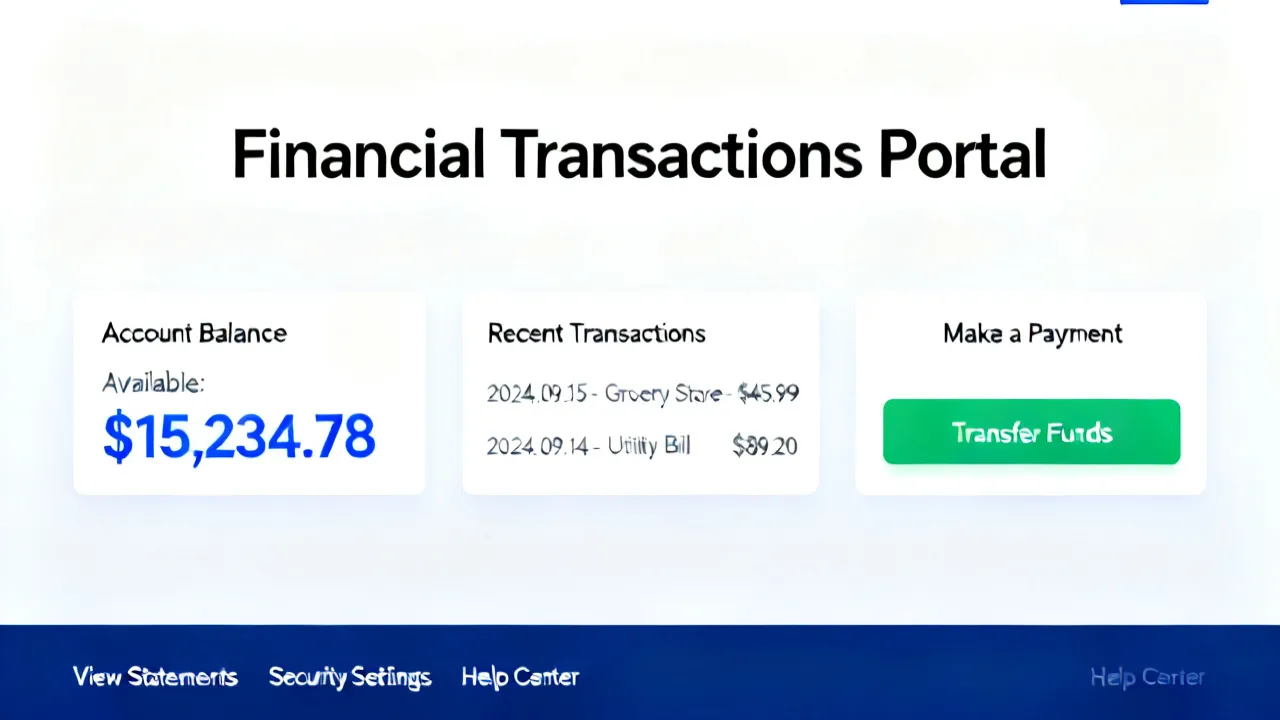
The Comprehensive Guide to Corpay.com
This article delves into the features and benefits of Corpay.com, a key player in the financial transaction space. Known for its innovative solutions, the website offers robust tools for managing financial transactions, making it a valuable resource for businesses and individuals alike seeking efficiency and reliability in managing their financial operations. Explore its offerings to gain a deeper understanding of its industry impact.
Understanding Lifetime Benefits Solutions and How to Choose Wisely
This guide explains how to evaluate Lifetime Benefits Solutions services with a practical, objective lens. It outlines what the keywords typically refer to in benefits planning, why customers compare providers and pricing structures, and how to approach decisions responsibly. You’ll also find a conditions checklist, a comparison table framework, and a set of FAQs to support informed next steps.
Understanding the Impact of 0009968545
This article explores the significance and implications of the keyword '0009968545' within industry and academia. Although '0009968545' might appear as an abstract sequence of numbers to the unaccustomed eye, it potentially represents an International Standard Book Number (ISBN) that could be a crucial reference for numerous academic publications. This analysis examines the potential contexts and influences of this code, offering insights from an expert's perspective.

Understanding Payroll Saginfotech Solutions
In today's rapidly evolving business environment, payroll management has become an indispensable part of corporate administration. Payroll Saginfotech, a notable player in the software industry, has developed robust solutions to streamline payroll processes, ensuring compliance, efficiency, and ease of operation. Explore the functionalities, features, and advantages of using Payroll Saginfotech in this comprehensive guide.
