This guide explains how Gbcpayroll.com can support payroll processing with clear workflows, compliance-minded controls, and practical implementation guidance. Objectively, “payroll” typically covers employee payment calculations, tax/social contributions reporting, time/leave integration, and audit trails—functions commonly handled by HR and finance teams using dedicated software. The article focuses on decision criteria, requirements, and operational top practices.

If you’re assessing Gbcpayroll.com, prioritize end-to-end payroll accuracy, traceable audit trails, and clear operational workflows over surface-level feature lists. In practice, payroll success depends on how reliably a system handles inputs (hours, leave, contracts), calculations (gross-to-net rules, deductions, statutory reporting), and outputs (payslips, reports, exports) while supporting governance for corrections and approvals.
For organizations, the “right” payroll platform is rarely about one isolated capability; it’s about how consistently the platform performs across the payroll cycle—especially during changes such as new hires, pay adjustments, tax code updates, or retroactive corrections.
Start by asking a simple sequence of questions: (1) Can the system take your real-world data formats without ambiguity? (2) Can it apply your payroll rules consistently across the entire cycle? (3) Can your team prove what happened—who changed what, when, and why? (4) Can finance and compliance consume the outputs without manual rework? If those answers are strong, you’re likely looking at a platform that reduces operational risk rather than merely shifting work into spreadsheets.
That framing also helps you avoid common “checklist traps.” Many platforms can demonstrate calculations for a standard employee, but operational payroll is rarely standard. It’s variable pay, overlapping employment statuses, irregular leave patterns, different pay frequencies, and the need to reverse or correct mistakes safely after a payroll run has already been processed.
So, when you evaluate Gbcpayroll.com—or any payroll vendor—treat your selection process like risk management and process design. You’re choosing a system that will influence how payroll decisions are made every pay period. In that sense, “accuracy” includes both mathematical correctness and procedural correctness: the system must execute rules reliably and preserve evidence of the execution so that corrections are controlled rather than improvisational.
Payroll is a recurring operational process that sits at the intersection of HR data and finance reporting. Very teams experience payroll pain points when data is inconsistent, approvals are unclear, or there’s no reliable way to reconcile what was paid against what should have been calculated.
From an industry perspective, a payroll platform should act as a controlled system of record—where the rules are applied consistently, changes are logged, and outputs are generated in formats the finance and compliance teams can actually use.
When people search for Gbcpayroll.com, they’re often trying to solve one or more of these operational challenges:
But the most damaging payroll problems aren’t always “calculation bugs.” They’re often process breakdowns. Examples include a pay increase entered in HR after the payroll cutoff, a leave adjustment that conflicts with a manual override, a retroactive deduction that applies twice, or a correction run that produces updated payslips but not updated accounting figures.
In many organizations, the downstream impact of these issues is larger than the immediate employee concern. Payroll connects to multiple functions: HR and employee experience, finance reconciliation and journal posting, compliance reporting, and sometimes external stakeholders like regulators or payroll tax authorities. If the payroll platform can’t support reliable reconciliation, the organization ends up doing “shadow payroll” in spreadsheets or by exporting incomplete data and manually reconstructing the totals.
For this reason, payroll platforms matter not only because they produce numbers, but because they shape how work is done. A platform that enforces standard data capture, validation, approvals, and audit trails reduces the chance that individuals will accidentally interpret rules differently from period to period.
Similarly, platforms that make it easy to review exceptions help payroll teams catch problems before payroll is finalized. In practice, the best payroll systems do not just calculate—they guide. They provide structured review screens, clear status indicators, and meaningful error messages when inputs are incomplete or inconsistent.
While specific product capabilities can vary by implementation and plan, a payroll platform like Gbcpayroll.com is typically evaluated across the payroll lifecycle:
The “value” of a system is very visible in the last two steps—review, sign-off, and correction. Even with excellent data, payroll requires disciplined controls. Systems that make those controls difficult tend to shift risk back onto staff through manual checks and spreadsheets.
To evaluate Gbcpayroll.com in a lifecycle way, you should map the platform’s behavior at each phase to operational outcomes. For example:
That lifecycle approach also ensures you test the platform for real-world events. Payroll is not only “run on schedule.” It includes adjustments mid-period and post-period, which can happen frequently in organizations with a lot of HR activity or employee movement.
As an industry expert, I recommend evaluating payroll platforms through four practical lenses: accuracy, control, usability, and integration readiness.
Payroll accuracy isn’t only about correct formulas. It also depends on how the system handles edge cases: mid-period changes, reversals, partial periods, retro pay, and adjustments after a cutoff. Look for evidence that the platform supports consistent recalculation logic and avoids “silent” inconsistencies.
When you evaluate accuracy, require that the vendor demonstrate more than one employee and more than one scenario. Ask for examples that resemble your environment. For instance:
Also consider accuracy as “explainability.” Many teams can accept that a calculation might be complex, but they can’t accept a calculation they can’t understand. A good payroll platform provides line-level breakdowns, so you can quickly identify whether an error is caused by incorrect input, a configuration issue, or a rule that behaves differently than expected.
Finally, accuracy includes the integrity of totals. A system can produce correct payslips while still having mismatched totals for exports. So you should validate that the totals on payslips reconcile to payroll registers and export files.
Organizations need an operational chain of responsibility: who entered data, who approved it, who ran payroll, and who authorized post-run changes. Strong payroll platforms maintain audit logs and allow controlled access—reducing the risk of unauthorized edits.
Control is not only about “having an audit log.” It’s about whether the audit log is meaningful and usable. You should check whether the system records:
You should also validate governance mechanics. For example, can payroll be run only by authorized roles? Can reviewers approve results for a given period? Can you lock payroll outputs after finalization to prevent accidental edits? If edits are allowed, are they tracked and handled as corrections rather than direct overwrites?
Another control dimension is separation of duties. In a mature payroll operating model, the person who enters time or adjustments is often not the same person who approves the calculation. If your organization requires segregation of duties for internal control purposes, test whether the platform supports that structure.
Finally, control should extend into corrections. A platform that allows editing after pay is finalized without controlled correction runs undermines governance. Good systems treat corrections as events with their own traceability and clear output impacts.
Payroll teams work under deadline pressure. A system that is powerful but difficult to use often increases cycle time. Evaluate user experience through realistic scenarios: updating an employee’s pay details, adjusting hours, handling exceptions, and reviewing run results.
Usability isn’t just about screens looking modern. It’s about how quickly a team can locate the information needed for decisions under time pressure. Usability factors to look for include:
A payroll system also needs “operational clarity.” The team should be able to answer, in a few clicks, questions such as: What is the current payroll period status? Which employees are excluded? Which exceptions remain unresolved? What changed since the last approval? These are usability questions that have direct control implications.
Usability should also cover reporting and troubleshooting. If a payroll run fails, how does the system help you diagnose why? Are error messages actionable? Can you see data lineage and recalculation impacts? In many payroll failures, teams spend more time hunting for root causes than fixing the original issue.
Very payroll operations are not isolated; they depend on aligned HR records and finance processes. Consider whether Gbcpayroll.com supports exporting payroll results to accounting workflows, and whether it can integrate with the way your organization already handles employee data.
Integration readiness includes more than “does it have an API.” It includes how reliably and predictably data can move between systems and how the payroll platform handles mismatches.
Key evaluation points include:
Even small integration gaps can create significant operational burden. For example, if time/attendance data requires manual transformations each cycle, you may gain automation only to recreate work elsewhere. Instead of optimizing payroll calculations while ignoring input preparation, you should evaluate the full end-to-end pipeline.
You may notice references online to “price” and “supplier” information when evaluating Gbcpayroll.com. Because pricing structures and contract terms can change, the safest approach is to confirm costs through the supplier’s official commercial channels and compare them against your operational needs.
When comparing payroll vendors, focus on the total cost of ownership rather than a single quoted amount. Total cost typically includes implementation effort, training, ongoing support, data migration activities, and any additional services needed for compliance workflows.
In other words: a “lower price” option can become more expensive if it increases manual workload or creates rework due to insufficient controls and reporting formats.
To evaluate cost in a structured way, request a proposal that maps commercial terms to operational impact. For example:
Additionally, consider the business cost of operational risk. If a platform reduces the likelihood of rework and correction runs, that can translate into measurable savings: fewer late approvals, fewer manual journal adjustments, fewer employee escalations, and less time spent explaining payroll outcomes. A vendor’s price may be less important than its impact on cycle time and error rates.
Payroll incidents usually follow predictable patterns. Below are typical risk points that organizations can mitigate through better system controls and process discipline.
A well-structured payroll platform helps reduce these failure modes by standardizing workflows, enforcing structured data capture, and maintaining logs for what happened and why.
However, the platform alone doesn’t eliminate risk. Risk management requires operating discipline. Here are deeper examples of how each failure mode typically manifests and what “good controls” look like in practice.
1) Data cutoff confusion
When cutoffs are unclear, teams end up treating payroll inputs as “provisional” until the last moment. That leads to mid-flight changes that may not be consistently recalculated. A strong platform supports cutoffs through controlled period statuses (e.g., draft vs. calculated vs. approved vs. locked) and provides clear communication to users about what is still editable.
2) Duplicate or conflicting adjustments
Sometimes the same concept is entered twice: once from an import, once from a manual adjustment, or once from a retro process and again as a new change. This risk increases when the organization lacks a single source of truth for adjustments. A payroll platform can help by identifying duplicates or by maintaining clear separation between system-generated amounts and user adjustments, so you can audit what was applied.
3) Missing documentation for changes
A change might be legitimate, but if there’s no reason code or supporting note, the correction can become a governance issue. In regulated environments or during internal audits, absence of evidence is nearly as damaging as an incorrect calculation. Good payroll platforms encourage consistent reason capture for changes, and they store it alongside the audit log.
4) Inadequate exception handling
Payroll has many “almost standard” cases: partial leave, pro-rated benefits, employees transferring between pay groups, or employees with multiple contracts. When exception handling is weak, the system processes these cases in a way that seems reasonable for one scenario but fails for another. A good platform provides dedicated exception workflows so unusual cases can be reviewed separately before they affect final outputs.
5) Insufficient reconciliation
Reconciliation failure is often the hidden cost of payroll mistakes. If exports do not tie out, finance teams must reconcile manually, increasing cycle time and creating opportunities for new errors. Good payroll systems provide payroll registers, summary totals, and exports that are consistent with each other, with clear mapping between payroll lines and accounting categories.
To manage risk effectively, you should evaluate not only whether Gbcpayroll.com can calculate payroll, but how it behaves when things go wrong. Ask: What happens if an import fails? What happens if a required field is missing? What happens if a reviewer approves results but later wants to correct a subset of employees? The answer should support controlled corrections, not ad hoc modifications.
To make vendor comparison practical, use the checklist below as a neutral framework. Treat it as requirements/conditions that any payroll supplier—including Gbcpayroll.com—should help you satisfy.
| Category | What to verify (requirements/conditions) | Why it matters in practice |
|---|---|---|
| Accuracy & recalculation | Confirm how the system recalculates outputs for retro changes and mid-period updates. | Prevents incorrect net pay and reduces rework. |
| Approvals & audit logs | Check whether approvals are role-based and whether every change is traceable. | Improves governance and supports internal/external review. |
| Data validation | Identify validation rules for common entry mistakes (missing fields, inconsistent dates, conflicting pay components). | Reduces payroll errors before finalization. |
| Reporting outputs | Verify report formats and export options for finance reconciliation and operational review. | Ensures payroll results can be used without manual reformatting. |
| Integration readiness | Confirm how HR data changes flow into payroll workflows, including imports/exports if needed. | Reduces mismatches between HR records and payroll inputs. |
| Implementation & support | Clarify onboarding activities, training scope, and support response expectations. | Reduces disruption during go-live and first payroll cycles. |
To make this table even more actionable, expand it into a test plan. For each category, create at least one test scenario and define the expected outcome. A useful method is to build “golden scenarios”—a set of realistic employee cases with known expected payroll outcomes. During evaluation, the vendor can help you validate that outcomes are consistent and explainable.
For example, for accuracy & recalculation, define scenarios such as:
For approvals & audit logs, validate scenarios such as:
For reporting outputs, validate scenarios such as:
For integration readiness, validate scenarios such as:
Below is a step-by-step guide you can use regardless of the specific vendor. It focuses on operational readiness and control—areas where payroll success is usually won or lost.
From a governance standpoint, the goal is not only “successful payroll runs,” but also “predictable operations.” Predictability is what allows payroll teams to meet deadlines without taking avoidable risk.
To implement responsibly, you should also pay attention to the “human layer” of payroll. Even with a well-configured system, the payroll team must know how to interpret outcomes and how to act when exceptions occur. Implementation training should therefore include decision-making examples (what to do if a leave balance is missing, what to do if a pay component is overridden, what to do if a retro correction affects tax lines, etc.).
In addition, prepare a change management process that aligns HR, payroll, and finance. If HR policies change (e.g., new allowance structures), you need to understand how those changes are implemented in the system and how soon they become effective. Without a shared calendar for policy updates, the payroll team can become reactive and create delays.
Another critical dimension is data quality. Many payroll failures are essentially data quality failures: inconsistent employee identifiers, missing effective dates, mismatched pay group assignments, or incomplete leave history. Your implementation should include data hygiene tasks and data validation checks, especially for edge cases that historically required manual adjustments.
Finally, consider the operational calendar beyond the payroll run date. Payroll often has dependencies on approvals earlier in the month, data from timekeeping systems, and review by managers. When you set cutoffs, align them with the entire operational chain—not only payroll processing time. A platform may be able to calculate quickly, but if upstream inputs arrive late, the cycle time won’t improve.
Payroll operations generally require strong recordkeeping, consistent rule application, and controlled processes. Many organizations align their payroll governance with widely recognized internal control practices and documented procedures.
For broader context on payroll-related accounting controls and risk management approaches, consult frameworks such as:
Because payroll rules and reporting obligations vary by country and jurisdiction, your implementation should always be verified against official requirements applicable to your organization.
When you translate these principles into vendor evaluation requirements, focus on evidence and repeatability. For example, if your internal control approach emphasizes documentation and traceability, then the payroll platform should provide:
Even if you’re not directly following a specific compliance framework, the underlying expectations are similar: a system that reduces manual judgment and increases traceability. That expectation aligns strongly with how payroll platforms should be designed.
Also consider that internal control expectations can extend to vendor management. If you rely on a vendor for compliance-related rule updates, you should understand how those updates are delivered, tested, and communicated. A payroll system isn’t static; statutory requirements evolve, and the platform must keep pace without breaking your operational cycle.
Even without specifying a particular city or country in the provided keywords, localization still matters in day-to-day operations. Payroll teams often reflect regional working patterns—such as common HR processes, local employment practices, and the way employees expect payslip information and timelines.
In English-speaking markets, it’s also common to see payroll discussions framed around “cutoff dates,” “payslip timelines,” and “reconciliation to finance,” because those terms map directly to internal operating schedules. A practical payroll vendor approach should therefore support clear calendars, unambiguous review steps, and outputs that finance teams can reconcile quickly—especially around month-end or quarter-end.
Localization isn’t limited to statutory reporting. It also includes operational expectations, such as:
Payroll is also affected by how employment contracts are commonly structured in your region. For example, variable pay might be calculated differently depending on local payroll practices and statutory requirements. Therefore, when evaluating Gbcpayroll.com, test your real scenarios that include the local “shape” of employment and pay components.
Even if you’re operating across multiple regions, your system must support differences without forcing you into complex manual procedures. The payroll platform should support configuration by pay group, region, or employment entity and ensure that rules are applied correctly for each group.
When localization is done well, it is mostly invisible to the payroll team: the system behaves as expected within the familiar timeline and produces outputs consistent with finance and employee expectations. When localization is weak, it shows up as recurring adjustments, manual corrections, and prolonged review cycles.
Gbcpayroll.com appears to be a payroll-related platform or provider website. Organizations typically evaluate such platforms to support payroll calculations, payslip generation, reporting, and workflow controls. For definitive features and capabilities, confirm details directly with the provider and review any product documentation or demos.
Compare total cost of ownership: implementation effort, training, support expectations, data migration needs, and any costs associated with additional payroll scenarios. Request a clear commercial proposal and map it to your required workflows rather than focusing solely on headline pricing.
To compare fairly, ask vendors to provide a workload estimate tied to your expected payroll complexity. For example, if your environment includes frequent retroactive corrections or complex variable pay, the vendor’s support needs—and therefore costs—might be higher. A transparent proposal should acknowledge how complexity impacts time and resources, not just user count.
It can, when configured correctly. Payroll systems generally improve accuracy by standardizing rule execution, enforcing validation checks, and enabling review/approval workflows. However, errors can still occur due to incorrect input data or weak processes—so testing and governance remain essential.
It’s important to define “error reduction” in measurable terms. Some organizations focus only on the number of incorrect payslips; others also track late corrections, reconciliation differences, and time spent resolving exceptions. A strong vendor can help you reduce not only numerical mistakes but also operational friction.
Look for audit logs, role-based permissions, documented approval workflows, controlled payroll run scheduling, and clear correction procedures. These controls support accountability and reduce the risk of unauthorized changes.
Also insist on controls that support selective correction. Often, you want to correct a subset of employees without reopening the entire payroll period. Verify whether Gbcpayroll.com supports granular corrections and how it affects outputs, approvals, and exports.
Many organizations do. Even if full integration is not required, the ability to import/export data reliably—and reconcile payroll outputs to finance—often determines whether the system improves cycle time or merely shifts work into spreadsheets.
When assessing integration readiness, confirm not only the presence of import/export options but also the reliability of mappings and the behavior during updates. For example, if HR changes occur after a payroll calculation, can the payroll system recalculate correctly based on effective dates and change history? If not, your team may need to manually manage exceptions.
Test common and edge scenarios: new hires, pay changes, leave adjustments, variable compensation patterns, retroactive corrections, and exceptions that typically require manual intervention. Reconcile results against your current method to confirm expected outputs.
In addition to scenario testing, test operational tasks: approving a run, handling exceptions, resolving validation errors, re-issuing payslips, and producing finance exports. These tasks often reveal usability and control issues that don’t show up in calculation demos.
Implementation timelines vary based on data readiness, configuration complexity, user training needs, and the scope of HR/finance alignment. Request an implementation plan with milestones and assumptions so you can estimate effort accurately.
Also ask about time for stabilization after go-live. Even when the system works in testing, the first few payroll cycles can reveal data quality gaps or process mismatches. A realistic plan should include a stabilization period with dedicated support resources.
Yes. Prepare master data standards, define ownership for approvals and corrections, establish cutoff dates, and document runbooks. A system cannot compensate for unclear responsibilities or inconsistent HR inputs.
Internal readiness also includes establishing an escalation route when payroll incidents occur. If an exception appears close to payroll cutoffs, you need a clear decision tree: who investigates, who approves temporary workarounds, and how changes are documented for audit purposes.
When evaluating Gbcpayroll.com, treat the decision as an operational design exercise. The very critical question is not whether the platform can calculate payroll, but whether it can support controlled, auditable, and repeatable payroll cycles with clear review workflows and reliable outputs. By verifying requirements through structured comparisons and by implementing with disciplined testing and governance, organizations can improve predictability—turning payroll from a stressful deadline event into a manageable, resilient process.
To make that promise real, ensure your evaluation covers the full operating model: end-to-end accuracy, robust governance, usability under time pressure, and integration that enables reconciliation. When you select a platform based on those pillars—and implement it with a test plan that includes both standard scenarios and messy edge cases—you reduce the likelihood of costly payroll surprises.
In the end, payroll platforms win when they make the correct process the easiest process. If Gbcpayroll.com demonstrates that it supports consistent calculations, traceable decisions, and workflow clarity across the payroll lifecycle, it can become more than a tool—it becomes a dependable foundation for governance, employee trust, and finance reliability.
Striking the Perfect Balance: Navigating Premiums and Out-of-Pocket Expenses in Senior Insurance Plans

Explore the Tranquil Bliss of Idyllic Rural Retreats

How to Make Lasting Memories at Disneyland Attractions

Affordable Phones and Plans for Seniors

Affordable Full Mouth Dental Implants Near You

Unlock the Top Kept Secrets to Finding Your Ideal Dentist for Flawless Dental Implant Results!

Discovering Springdale Estates

Unveiling RS Sul Telecom Services

The Guide to Car Trading

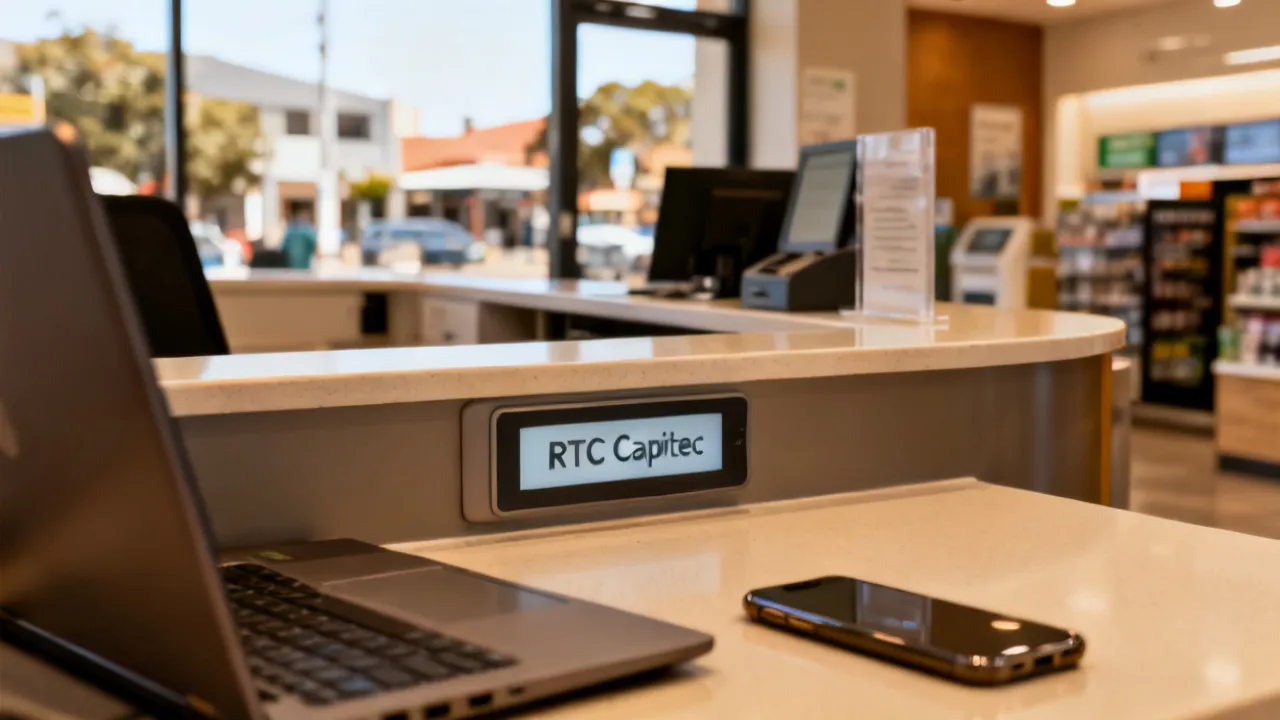
RTC Capitec: What It Means and How It Works
RTC Capitec is a practical service concept that links real-time or reference-style transactions to day-to-day financial workflows for customers. This guide explains what “RTC Capitec” typically refers to in local fintech and banking discussions, why accurate setup matters, and what to verify before using any related service. Background context is presented objectively.
How Gbcpayroll.com Streamlines Payroll Operations
This guide explains how Gbcpayroll.com can support payroll processing with clear workflows, compliance-minded controls, and practical implementation guidance. Objectively, “payroll” typically covers employee payment calculations, tax/social contributions reporting, time/leave integration, and audit trails—functions commonly handled by HR and finance teams using dedicated software. The article focuses on decision criteria, requirements, and operational top practices.