This guide explains how to evaluate “Spin Automatica” automation for industrial workflows, from component fit and throughput expectations to maintenance readiness and supplier due diligence. Objectively, spin-based automation concepts are used to enhance repeatability in handling, metering, and processing. You’ll also find a comparison table, a step-by-step selection checklist, and practical requirements to reduce misalignment between needs and installed performance.

When evaluating Spin Automatica for industrial production, the very important decision is not “which model sounds top,” but whether the system’s motion profile, integration effort, and support structure match your real constraints—product characteristics, line speed targets, available utilities, and changeover frequency. A well-matched setup can improve consistency and reduce rework by aligning automation behavior with the handling and processing demands of the material.
Objectively, spin-based automation (often involving rotary motion, controlled agitation, or indexed turning for repeatable process conditions) is frequently selected because it can deliver stable positioning and repeatability under defined parameters. In procurement and engineering terms, the value comes from predictable cycles, measurable output quality, and manageable maintenance rather than from marketing claims.
A practical way to think about the “fit” is to map your production outcomes to the motion system’s controllable levers. If your primary bottleneck is variation in orientation before processing, then angular repeatability and dwell control matter more than raw throughput. If your primary bottleneck is mixing uniformity or contact time consistency, then the acceleration profile, agitation pattern, and temperature/viscosity stability during the spin window may dominate. If your bottleneck is downstream packaging synchronization, then indexing accuracy and consistent trigger timing often dominate the design.
That is why a good match is rarely about the machine’s headline capability alone. It is about alignment across mechanical design, sensing strategy, control algorithms, safety architecture, and operational workflow. Even if two proposals both claim “rotary/spin motion with repeatability,” the performance you get in production can vary dramatically if the suppliers differ in how they measure position, how they compensate for part-to-part variability, how they maintain stability under real disturbances, and how they handle exceptions like misfeeds, jam conditions, or short material supply.
There’s also a subtle but important procurement point: “Spin Automatica” solutions often sit at the intersection of mechanical handling and process control. Many projects fail not because the spin motion can’t be achieved, but because engineers underestimated the end-to-end impacts on product stability during feed, during spin, during transfer out of the spin station, and during any subsequent inspection. So, you should evaluate the solution as part of a broader system—not as an isolated motion module.
Practical next step: before requesting a formal quotation, prepare a short discovery brief that describes the item being processed, required cycle time, acceptable tolerance windows, the packaging or downstream interface, and your preferred maintenance schedule. This information helps suppliers—whether equipment integrators, machine builders, or automation OEM partners—respond with technically comparable options and more reliable pricing.
In addition, consider capturing constraints that are often overlooked in early RFQs: line layout limits (space for guarding, access, and maintenance), operator ergonomics, washdown requirements, allowable noise/vibration levels, and any existing PLC/HMI standards you want to reuse. If your plant uses a specific industrial network architecture, safety PLC platform, or engineering workflow, mention it early. The best way to reduce integration risk is to prevent “late-stage surprises” where a vendor discovers your constraints only after design is underway.
The phrase Spin Automatica is commonly used in industry to refer to an automation approach built around controlled rotational or spin-related motion inside a machine system. Depending on the application, that motion may serve different roles, such as:
Because real systems differ, an expert approach is to treat “Spin Automatica” as a capability category rather than a single fixed machine. Your evaluation should therefore focus on verifiable inputs: motion control method, actuation type, measurement approach (vision, encoder feedback, force sensing), and how the system behaves under start-up, steady operation, and changeover.
In many projects, the “spin” mechanism is only one component of the station. The full capability usually includes how parts arrive (feeder type, singulation quality, buffering), how parts are captured or gripped during rotation (clamps, chucks, vacuum, holders, compliant interfaces), how the station transfers part orientation to the next step (robot pick, conveyor transfer, slide transfer, gravity drop), and how the machine ensures repeatability across operational disturbances (temperature drift, material viscosity changes, wear in contact surfaces, operator differences in how items are loaded).
Also consider that “spin-based automation” can include different motion patterns. Some systems use a single indexed rotation with dwell; others use continuous rotation combined with timed process actions; still others use repeated micro-indexing for gradual alignment or progressive mixing. Each pattern affects control tuning, safety hazards, and quality outcomes. A supplier who only discusses “rotary motion” without specifying the motion sequence, dwell times, and control feedback strategy may not be giving you enough information to evaluate real performance.
It’s also useful to ask suppliers to describe what happens in “off-nominal” scenarios. What if a part enters slightly skewed? What if a part is missing? What if downstream is paused? How does the spin station handle a temporary stop without losing positioning state? In high-throughput lines, these questions can be the difference between a stable production machine and one that frequently requires operator intervention.
In very automation procurement processes, “price” is not a single number—it’s the outcome of several cost drivers that affect engineering risk and commissioning time. While you may encounter Spin Automatica price references in catalogs or reseller quotes, the very reliable cost estimate typically comes from a scoped request that includes your product specs and integration requirements.
Common cost drivers include:
Engineering hours often become the hidden lever behind “cheap” vs “expensive” proposals. A vendor may propose a lower hardware cost but assume more work is done by your internal team for mechanical adaptation, software integration, or sensor verification. If you don’t account for that division of responsibility, budgets can drift quickly.
Motion system complexity is another driver that can be misinterpreted. Precision components might look optional, but they are often required to achieve the repeatability you need at your cycle time. For example, higher encoder resolution and better mechanical stiffness might be necessary if you require tight angular tolerances during fast indexing. Conversely, if your application tolerates more variation, a simpler motion solution might be adequate and cost-effective.
Safety architecture is particularly important to handle early. Guarding design, safety interlocks, safe torque-off (STO) behavior, safe motion monitoring, and safe restart logic can require both engineering time and physical space. If a machine must fit into an existing line with limited footprint, safety requirements can become a major cost driver because they influence mechanical layout and access pathways.
Controls and networking cost can also surprise teams. If you need traceability at the batch or serial level, integration with MES or a historian can add development and testing time. If your line requires event logs, quality data correlation, or job recipe management, those tasks must be included in the quotation scope—not bolted on later.
Commissioning scope should be treated as a formal deliverable. A common pitfall is when procurement teams request a “machine price” but do not define the acceptance test process, the sample size for stability testing, or who is responsible for field tuning. In practice, commissioning can be limited by product variability and by how quickly you can run representative materials. If you want a stable go-live, define those assumptions up front.
Maintenance approach includes both the design for serviceability and the policy for spares. If the vendor designs the system with convenient access to lubrication points, maintains standardized fastener practices, and provides a recommended spare kit, total cost of ownership typically improves. However, if the design makes critical components difficult to reach or requires specialized calibration frequently, maintenance costs will escalate over time.
Supplier due diligence matters because it influences both price and schedule. A supplier that underestimates commissioning scope often leads to “budget drift” later. For objective comparison, insist on a written scope of supply and a clearly described acceptance test plan.
To further improve price transparency, consider requesting a “breakdown of pricing logic,” such as major line items and what each includes. Even if the vendor won’t disclose detailed internal margins, a clear itemized deliverables list helps you identify where cost is being shifted into integration effort, training, or commissioning.
Suppliers for Spin Automatica installations can include OEM machine builders, systems integrators, and automation resellers. Regardless of category, you should evaluate suppliers using a consistent scoring method based on documentation quality and delivery discipline.
Key supplier evaluation criteria:
Even when multiple vendors offer similar basic motion concepts, the execution differs. Look for a supplier who can translate your requirements into measurable outputs—cycle time range, repeatability metrics, reject-rate definition, and uptime expectations that you can actually test on your floor.
Here are additional objective comparison points that often separate strong partners from average ones:
To compare objectively, you can request sample deliverables. For example, ask for a template acceptance test procedure, a sample risk assessment format, or an example of their typical HMI screens. The “quality of artifacts” is a strong predictor of how smooth commissioning will be.
For any Spin Automatica system, integration is the stage where theoretical performance becomes operational performance. To minimize surprises, clarify these items early:
From an industry expert perspective, the biggest hidden variable is not the spin mechanism itself—it’s how the machine maintains process stability across real-world disturbances: temperature swings, operator differences in loading, minor variations in incoming materials, and downstream tempo changes.
Integration success often hinges on four specific domains:
1) Synchronization with the line: A spin station may have a fixed motion cycle, but the line feeding into it and the line consuming from it may vary. If upstream feed fluctuates, you need buffering logic and a robust part-present detection strategy. If downstream stops unexpectedly, you need safe states that preserve product integrity and prevent damaged parts from entering later stages.
2) Input/output quality: Machine performance depends on sensors that provide reliable signals. If a part-present sensor is too sensitive, it can cause false trips. If too insensitive, it can allow misfeeds. The “integration” challenge is often less about installing sensors and more about verifying their performance across your real product range.
3) Recipe management: Many spin-based applications require multiple variants (e.g., different product sizes, different process settings, different quality targets). Integration needs to ensure that recipe parameters are correctly mapped to motion sequences and that the system safely prevents running the wrong recipe for a given product. A robust HMI that reduces operator error is a major value driver.
4) Data and alarms: If your team wants to diagnose rejects quickly, alarms must be meaningful and data tags must be consistent. For example, it helps to record actual angular position profiles, dwell times, and sensor readings at least for short periods around faults. Without this, troubleshooting can become guesswork.
It’s also important to clarify integration timelines. Sometimes mechanical installation can be completed while control integration is still underway. But if acceptance tests rely on specific interfaces (like MES job triggers or quality measurement signals), those must be ready early enough to allow sufficient testing time. A good supplier will coordinate interface readiness milestones, not just final machine delivery.
When discussing Spin Automatica outcomes, it helps to define performance in measurable terms rather than generic phrases. Consider measuring:
Where possible, align your acceptance tests to recognized evaluation practices for industrial equipment commissioning. If your supplier offers performance testing, require test protocols that describe sample size, duration, measurement method, and acceptance criteria.
To ensure performance definitions remain practical, it helps to connect performance measures directly to downstream quality and operational cost. For example, instead of using “repeatability within X degrees” as a standalone metric, you can also link it to defect rate category reductions. That way, the performance measurement becomes meaningful to operations and quality teams.
Here are additional performance indicators that often reveal whether a spin-based system is truly stable:
Also consider the measurement method itself. If your repeatability verification relies on a measurement approach that doesn’t correlate with the actual process mechanism (e.g., verifying only static positions but not the motion dynamics), you may accept a system that underperforms in real operation. Ask how the supplier validates the relationship between measured motion parameters and resulting product outcomes.
Rotary motion systems carry inherent hazards—pinch points, rotating surfaces, and potential ejected parts if handling fails. A responsible Spin Automatica project should therefore include:
Do not treat safety as an “after the fact” checklist item. It affects design choices, commissioning time, and even whether the machine can be integrated without workflow interruptions.
To strengthen safety planning, you can require the supplier to provide a summary of their risk assessment process. Even if you won’t receive full internal documentation, the high-level structure matters: what hazards they considered (mechanical, electrical, thermal, stored energy), what safety functions were selected, and how they verify those safety functions.
Safety is also tied to operational stability. For instance, a poorly designed safety stop can cause repeated trips due to sensor misconfiguration, leading to increased operator work and potential quality losses. Conversely, a properly engineered safety architecture can reduce nuisance faults and improve overall uptime.
Specific safety topics to clarify in a spin-based machine:
In many plants, safety review involves internal EHS teams. A strong supplier will schedule safety reviews early enough that mechanical designs can be updated before costs increase. If safety is delayed until late-stage commissioning, redesign can become expensive and can threaten the timeline.
The following comparison is designed to help you structure internal discussions. It does not include prices or vendor names, because those values depend on scope and application specifics.
| Selection dimension | What to check | Why it matters |
|---|---|---|
| Application fit | Does the vendor show experience with similar item geometry, material behavior, and tolerance needs? | Reduces commissioning uncertainty and lowers the risk of repeatability gaps. |
| Motion control approach | Servo vs. indexed motion, sensing feedback type, and how parameters are tuned. | Determines stability under disturbances and changeover operations. |
| Quality verification method | Defined measurement approach and acceptance test criteria. | Prevents debates later about what “good output” actually means. |
| Integration effort | Interface signals, mechanical coupling, utilities requirements, and PLC/MES connectivity scope. | Controls the schedule impact and reduces hidden engineering work. |
| Maintenance readiness | Spare parts strategy, preventive maintenance intervals, and service access design. | Improves uptime and decreases unplanned downtime. |
| Supplier support | Remote diagnostics, escalation paths, and documentation deliverables. | Helps you respond quickly to process drift and component wear. |
Use this structured approach to evaluate Spin Automatica options without relying on vague claims.
Describe the current process limitations (variation, manual labor burden, rework, safety issues) and the target improvement range in operational terms (e.g., reduced defect rate category X, improved consistency, faster changeover).
To make this step more effective, translate the “problem” into both quality and operational impacts. For example, if quality variation is tied to orientation, link it to defect type and how it affects customer acceptance. If operational burden is tied to operator handling time, link it to takt time consumption and labor cost. This clarifies what the spin solution must accomplish and what “success” means to different internal stakeholders.
Include item dimensions, allowable orientation, material properties relevant to the spin/process stage (e.g., viscosity range if mixing-related), and any contamination or cleaning constraints.
When documenting material properties, don’t stop at a single nominal value. Provide ranges and typical distributions if possible. Spin-based systems may behave differently across viscosity changes, part weight variations, or surface friction differences. Including ranges helps vendors design control loops that can handle the full variability rather than only the “best-case” scenario.
List upstream feeds and downstream outputs, including conveyor timing, packaging format constraints, and required control signals.
Interfaces are often more than just I/O points. Provide details like signal semantics (“part accepted” vs “part present”), expected timing relationships, and how the line behaves under pauses. If your upstream/downstream equipment uses specific handshake protocols, describe them clearly. If you require data exchange for traceability, specify the job identifiers and how they must be associated with physical units.
Ask vendors to detail the mechanism behavior, sensing strategy, controls architecture overview, and the acceptance test plan. Ensure the scope of supply is explicit.
To avoid incomplete proposals, ask for concrete details: which sensors are used for part presence and orientation verification, what feedback is used for angular positioning (encoder, resolver, vision), and how calibration or alignment is performed during commissioning. Also request documentation of key assumptions, including utilities requirements and any expected product conditioning steps.
Score vendors on application fit, technical clarity, commissioning plan quality, safety design approach, and documentation completeness.
In addition to scoring, require a “risk register” discussion. Ask vendors to list known risks (for example, sensitivity to product variation, dependency on stable utilities, or reliance on particular part presentation quality). A vendor who identifies risks early is more likely to manage them responsibly during commissioning.
Where feasible, request a pilot run or representative tests that mimic your production variability. Confirm how measurements are taken and how reject logic is validated.
Pilot tests should include the edge cases that normally cause production problems: slightly misaligned parts, out-of-range weights, different lot materials, or brief upstream stoppages. Verify not only “good parts” but also how the machine identifies and handles nonconforming ones. This reduces the risk that the system meets performance only under ideal conditions.
Require documented safe operation steps, jam clearing instructions, lockout/tagout considerations, and safe restart behavior after faults.
Make sure the procedures include operational realities: who performs jam clearing, what tools are required, how operators confirm the system is in a safe state, and how the machine is returned to production-ready mode. If your plant has standardized lockout/tagout practices, align the documentation with those procedures to avoid confusion.
Conduct tests according to the agreed protocol. Capture results, compare against acceptance criteria, and document parameter baselines for future changeovers.
During acceptance testing, insist on capturing “as-built baselines.” These include tuning parameters, recipe default values, sensor thresholds, and motion profile settings. Without baselines, future changeovers can be inconsistent and require repeated debugging, which undermines the purpose of automation.
Implement preventive maintenance schedules, track downtime causes, and ensure the team has training and spare parts guidance to maintain stable performance.
Maintenance planning should include not only the schedule but also the “why.” For example, specify which components have wear mechanisms and how they affect repeatability or quality. Pair preventive maintenance with monitoring metrics like vibration trends, servo load monitoring, vacuum performance (if used), and drift indicators tied to quality outcomes.
To avoid mismatch between what you imagine and what a Spin Automatica system can deliver, include the following conditions in your request to suppliers:
It’s also helpful to include additional “operational reality” requirements that prevent misalignment later:
Spin-based automation concepts are selected in manufacturing because rotational or spin-like motion can provide stable and repeatable positioning, which can be beneficial when the process depends on consistent orientation or controlled agitation. In quality-focused environments, repeatability is often more valuable than raw speed alone, since consistent process conditions generally support predictable outcomes.
From a practical standpoint, repeatability typically depends on factors such as actuation stability, feedback quality, mechanical stiffness, and consistent part presentation. For that reason, supplier proposals should explain not only the motion idea, but also how feedback and tuning maintain stability over time.
To further understand why spin solutions are used, consider a few representative industrial patterns:
Orientation-sensitive processes: Some products require a specific orientation for labeling, coating, assembly, or inspection. Spin-based indexing can help bring a feature to a known angular position, enabling consistent downstream operations. For this use case, sensing for orientation and control over indexing accuracy are crucial.
Contact and mixing processes: For processes that depend on mixing uniformity or contact time—such as combining ingredients, coating distribution, or controlled agitation—spin can create predictable fluid dynamics. In these applications, your requirements likely include not only angle and dwell but also speed profile and time-at-speed. Temperature and viscosity effects can require additional compensation logic or monitoring.
Synchronization and buffering: In lines that integrate multiple steps, spin stations may serve as timing anchors. When upstream and downstream equipment operate at different tempos, indexing can align the part with sensors, feeders, or packaging operations. In this case, robust handshake logic and fault handling can be as important as mechanical repeatability.
For safety and quality frameworks, organizations frequently refer to established industrial standards and risk assessment approaches. For example, the IEC 60204-1 standard addresses safety requirements for electrical equipment in machinery, while the ISO 12100 standard supports risk assessment principles for machinery. Using such frameworks in your procurement process can improve clarity and reduce late-stage redesign.
When writing requirements, it also helps to specify which standards your plant expects the machine to comply with, and whether you expect documentation for conformity assessment. If you operate under particular regional compliance regimes, mention them so the supplier doesn’t need to retrofit documentation at the end of the project.
Spin Automatica generally refers to an automation system concept built around controlled rotational or spin-related motion used for repeatable handling, processing, or indexing. The exact configuration depends on the application and integration scope.
Compare quotes using an agreed scope: what’s included in the machine build, what integration tasks are covered, what acceptance tests are planned, and what documentation and training deliverables are included. Without scope clarity, “cheaper” quotes often shift cost into commissioning and engineering work.
Provide item dimensions, material or process behavior relevant to the spin stage, target cycle time, quality criteria, upstream/downstream interfaces, utilities constraints, and required control/traceability needs. This enables technically comparable proposals.
They can, but performance depends on how the system senses and compensates for variation (e.g., feedback from encoders or vision verification), and on whether your tolerance requirements are realistic. Ask suppliers to describe tuning and verification methods that address variability.
Safety planning typically includes risk assessment, appropriate guarding, safety-rated interlocks, safe stop and restart behavior, and documented procedures for clearing faults. Electrical and safety design should align with applicable industrial standards.
An acceptance test plan should define the measurement method, sample size or test duration, acceptance thresholds, and how results are recorded. It should also specify responsibilities for adjustments if performance is below target.
Commissioning duration varies with integration complexity, tooling readiness, and how quickly the process stabilizes. A reliable approach is to require a commissioning schedule outline tied to acceptance milestones and to agree on what “done” means for each stage.
Not always, but it depends on your traceability and reporting requirements. If your quality system needs batch records, event logs, or genealogy tracking, integration becomes important. If not, a simpler logging approach may be sufficient.
Ask for details about the motion sequence: acceleration/deceleration strategy, maximum jerk limits (if used), dwell timing, trigger timing relative to angular position, and how the profile is validated. Also request how they handle variations in mass, friction, or product loading that may affect motion response.
Request a clear list of sensors used for each purpose: part presence, orientation verification, motion feedback, and quality inspection (if separate). Confirm the feedback pathway used to close the control loop for angular positioning. Also ask how sensor signals are calibrated and monitored for drift or failure.
Require a recipe-based approach where possible, with clear guardrails to prevent running the wrong settings. Request documentation for calibration procedures and define who performs them. Also define whether changeover time includes setup, quality verification runs, and any required tuning adjustments.
Plan a ramp-up strategy that includes additional monitoring, faster escalation paths for troubleshooting, and a joint commissioning checklist. Ensure the supplier provides on-site support for critical initial days and that the documentation includes clear troubleshooting steps and spare parts access.
Choosing Spin Automatica effectively means focusing on integration readiness, safety posture, measurable quality criteria, and supplier accountability—rather than relying on generalized claims. If you structure your procurement brief around verifiable requirements, compare proposals consistently, and demand a clear acceptance test plan, you’re more likely to secure an automation setup that performs reliably in everyday production conditions.
In addition, a dependable decision is one that aligns stakeholders: procurement ensures scope clarity, engineering ensures interfaces and tuning assumptions are real, quality defines acceptance criteria that correlate with customer outcomes, and EHS ensures safety architecture is integrated early. When those roles align, spin-based automation can deliver the core value it’s chosen for—repeatable motion-driven process conditions that reduce variability, stabilize throughput, and minimize rework.
Striking the Perfect Balance: Navigating Premiums and Out-of-Pocket Expenses in Senior Insurance Plans

Explore the Tranquil Bliss of Idyllic Rural Retreats

How to Make Lasting Memories at Disneyland Attractions

Affordable Phones and Plans for Seniors

Affordable Full Mouth Dental Implants Near You

Unlock the Top Kept Secrets to Finding Your Ideal Dentist for Flawless Dental Implant Results!

Discovering Springdale Estates

The Guide to Car Trading

Affordable Cell Phones Without Plans


Understanding Proportional Valves
Proportional valves are hydraulic components vital for controlling fluid flow and pressure with high precision in various industrial applications. Their importance in automation and manufacturing settings stems from their ability to offer variable output in response to input signals, greatly enhancing system efficiency and performance.

Understanding Rexroth Valve Systems
Rexroth Valves are quintessential components in various industrial applications, known for their precision and reliability. These hydraulic, pneumatic, and electrohydraulic valves regulate fluid flow in machinery, ensuring optimal performance and safety. Understanding their functionality and benefits is crucial for industries seeking efficiency and sustainability in their operations.

Unveiling Thermo Fisher Chromatography
This article explores the pivotal role of Thermo Fisher Chromatography in modern analytical science. Chromatography is crucial for separating compounds within mixtures, making it indispensable in industries such as pharmaceuticals and environmental testing. Thermo Fisher Scientific stands out in this field for its innovative solutions, leading to improved accuracy and efficiency in research and development.

Understanding Corrosion Inhibitor Manufacturers
In today's industrial landscape, corrosion inhibitor manufacturers play a crucial role in safeguarding equipment and infrastructure against corrosive damage. These manufacturers provide specialized chemicals that prevent corrosion in various environments, including industries such as oil and gas, marine, and construction. Understanding their operations and offerings is essential for selecting the right supplier and maintaining asset longevity.
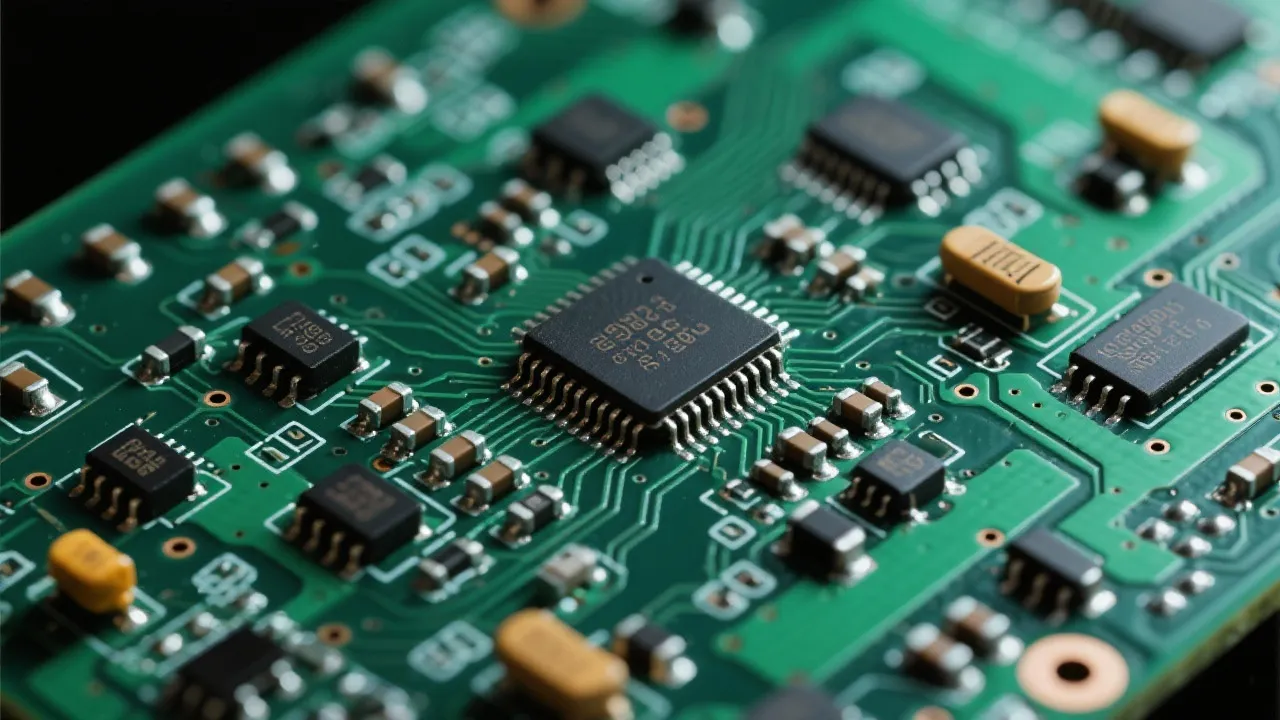
Analyzing Lm66100 Digikey Components
This article offers an in-depth analysis of the Lm66100 component available through Digikey, a renowned distributor of electronic components. The Lm66100, a load switch, is integral in industry applications, providing efficient power management. This piece explores its features, applications, and availability through Digikey, while offering a comprehensive guide for industry professionals seeking to optimize their electronic designs.

Leading Corrosion Inhibitor Suppliers
Corrosion inhibitor manufacturers play a crucial role in protecting materials from degradation. These companies specialize in creating chemical compounds that slow down or prevent the corrosive effects on various surfaces, especially metals. Understanding their production processes and solutions offered is vital for industries reliant on metal infrastructure.
